
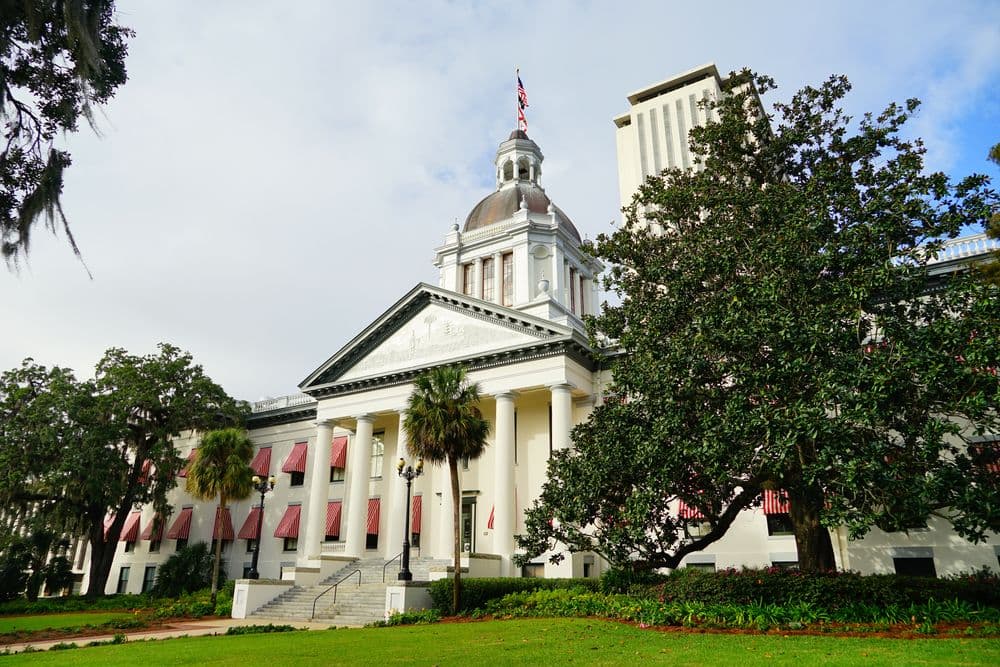
 Florida reopens bitcoin reserve debate as lawmakers balance risk and innovation. (Shutterstock)
At the start of the 2026 legislative session, state senators introduced new bills that would allow certain public funds to be allocated exclusively to Bitcoin as a reserve asset, reviving an idea that has resurfaced periodically over the past several years.
Filed on 12 December 2025, Senate Bill 1038 outlined a framework that would allow state financial authorities to allocate a portion of eligible funds to Bitcoin. The bill does not mandate any purchases and remains under Senate review.
Supporters of the bill argue that Bitcoin’s fixed supply and global liquidity give it characteristics that may complement traditional reserve assets over long time horizons. Rather than framing Bitcoin as a speculative bet, the legislation presents it as a potential hedge that could sit alongside more conventional holdings, provided that exposure remains limited and oversight remains strong.
A second proposal, Senate Bill 1039, focuses on how any digital assets held by the state must be secured. The bill lays out custody and storage requirements, including the use of secure custody arrangements and safeguards designed to reduce operational and counterparty risk. By separating investment authority from custody rules, lawmakers appear to be addressing one of the most common concerns raised in earlier debates: how public entities can safely hold digital assets without introducing unnecessary vulnerabilities.
Taken together, the two bills suggest a more cautious and structured approach than previous efforts. The language emphasizes internal controls, reporting obligations, and transparency, signaling that any move into Bitcoin would be gradual rather than aggressive. Exposure limits are built into the framework, ensuring that Bitcoin would represent only a portion of eligible reserves rather than a wholesale shift in treasury policy.
The renewed push comes at a time when Bitcoin is increasingly being discussed in institutional and policy circles, not just as a trading asset but as a long-term store of value. Over the past several years, growing institutional participation and the expansion of regulated investment vehicles have contributed to a shift in how policymakers view the asset. Florida’s proposal reflects that changing perception, treating Bitcoin less as an experiment and more as financial infrastructure that warrants formal consideration.
Florida’s interest in Bitcoin also fits into a broader pattern. The state has consistently marketed itself as a hub for financial technology and digital innovation, seeking to attract companies and talent in emerging sectors. Allowing public funds to hold Bitcoin, even on a limited basis, would reinforce that pro-innovation stance and set Florida apart from states that have chosen to take a more conservative approach.
Still, the bills acknowledge the risks involved. Both measures include reporting requirements that would require regular disclosures on holdings, valuation, and custody arrangements. These provisions are designed to ensure legislative oversight and public accountability, addressing concerns that digital assets could introduce volatility or opacity into public finance if left unchecked.
The legislative path ahead remains uncertain. Similar proposals in past sessions have struggled to gain sufficient support, often running into resistance from lawmakers who question whether Bitcoin’s price volatility is compatible with fiduciary responsibility. Committee hearings, fiscal impact reviews, and potential amendments will determine whether the bills advance or stall once again.
If enacted, Florida would become one of the most prominent U.S. states to formally authorize Bitcoin as part of a public reserve strategy. Such a move could influence discussions elsewhere, particularly as states compete to attract investment and modernize their financial frameworks. Even so, passage is far from guaranteed, and the outcome will likely depend on how lawmakers balance innovation against risk.
The reintroduction of these bills highlights how far the conversation around Bitcoin has shifted. What was once viewed largely as a niche or speculative asset is now being debated in the context of long-term fiscal planning. Whether Florida ultimately moves forward or not, the legislation underscores a growing willingness among state governments to engage directly with digital assets at an institutional level.

Maritime assets move closer to blockchain markets

AI reshapes institutional learning across MENA

Terafab ties AI, robotics and space together

Firebird scales up Armenia’s AI infrastructure

Stay ahead with the latest updates, insights, and trends shaping the world of finance, investment, blockchain, digital business, fintech, technology, and global markets.

