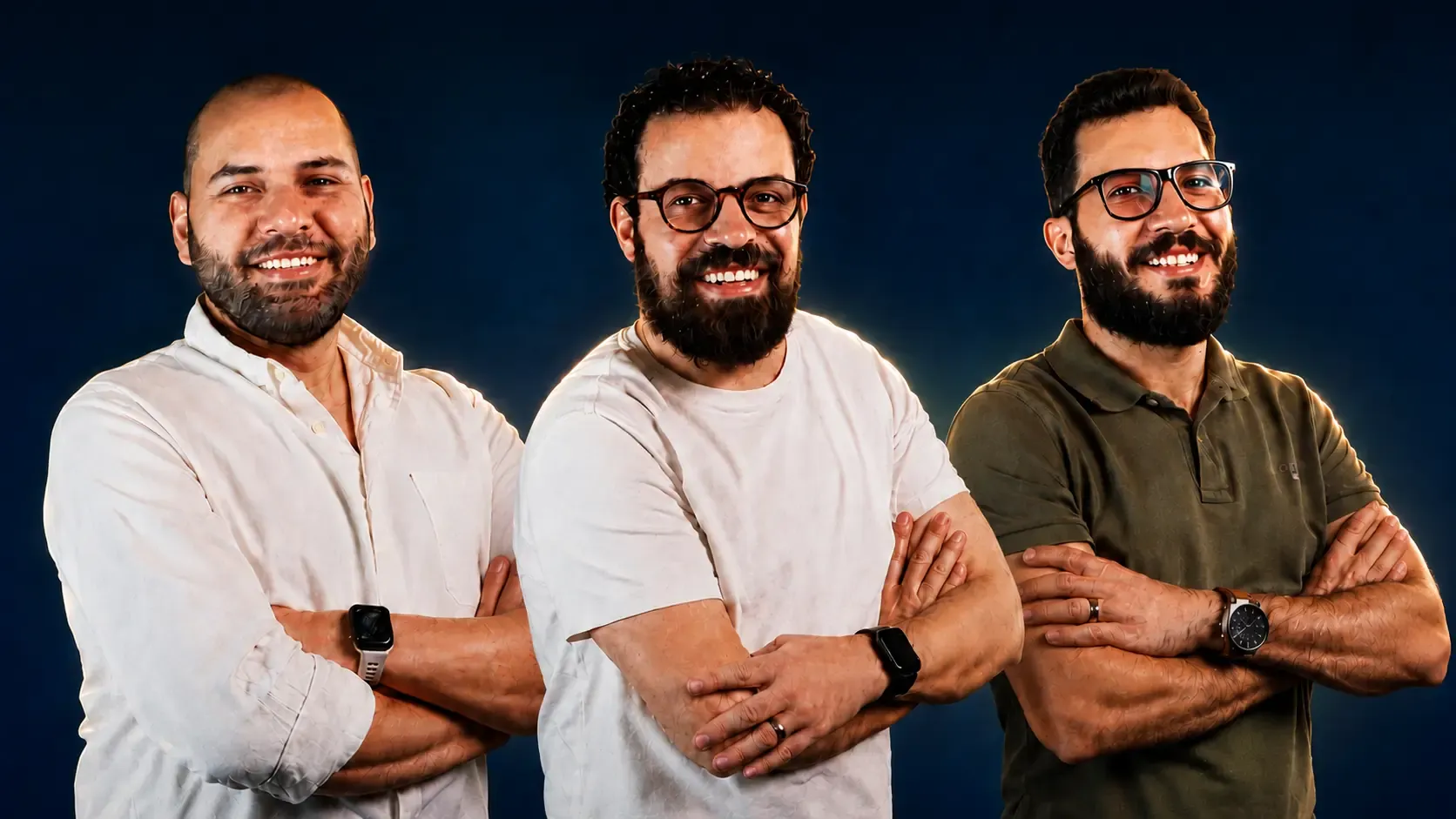
UMAMI E-Learning Solutions is developing LOS™, a platform it describes as a Learning Operating System designed to connect institutional objectives with competencies, learning experiences, assessment, data, analytics and performance.
In an exclusive written interview with Block News International, UMAMI co-founder and CEO Ahmed Seif explained why the company distinguishes LOS™ from a conventional learning management system and how it intends to use artificial intelligence as a decision-support layer for institutions.
Seif also discussed measuring capability beyond course-completion data, adapting the platform across MENA’s varied institutional environments, protecting sensitive information and allocating UMAMI’s announced EGP 50 million-plus phased investment.
Q: UMAMI describes LOS™ as a Learning Operating System rather than a conventional learning management system. What does that distinction mean in practice, and which institutional problems is LOS designed to address that existing learning platforms do not?
The distinction starts with a simple shift in perspective.
A traditional LMS is primarily designed to manage learning activity: courses, content, enrollments, participation, assessments and completion. These functions remain important, but institutions today need to answer much broader questions.
Are we building the capabilities we actually need? Where are the gaps? What should happen next? And how does learning connect to institutional performance?
That is where the Learning Operating System concept begins. LOS™ is designed as an operating layer that connects institutional objectives with competencies, learning experiences, assessment, data, analytics and performance.
In practice, that means moving from questions such as, “Did someone complete the course?” to questions such as, “What can this person now do? Where are the remaining capability gaps? What intervention should happen next? And is that development contributing to the organization’s objectives?”
The same principle extends beyond learning delivery itself. For example, in some of our school deployments, LOS™ is already supporting centralized admission processes across multiple schools and thousands of applicants. The system can analyze demand, academic scores, applicant preferences and other admission data to give institutions greater visibility when making decisions.
This is an important part of how we see LOS™ evolving. The goal is not to build a larger LMS with more features. It is to create the connective and intelligence layer between institutional processes, learning, data and decision-making.
Q: What role does artificial intelligence play within LOS, and can you provide specific examples of how institutions might use its AI capabilities to improve learning, workforce planning or decision-making?
We see AI as an intelligence layer within LOS™, not as the purpose of the platform. We are deliberately avoiding the idea of adding AI simply because AI is available. Its value, in our view, comes from helping people and institutions make better decisions.
At the learner level, AI can support more personalized guidance, knowledge access and learning recommendations based on individual needs and capability gaps.
At the management level, the opportunity becomes broader. AI can help identify patterns across learning, assessment and operational data, highlight emerging gaps and help institutions understand where intervention or investment may be required.
Over time, this can extend into predictive and decision-support use cases. For example, an institution managing admissions across a network of schools could potentially use historical demand, academic scores, preferences and capacity data to model different admission scenarios before making a final decision.
Similarly, organizations could use learning and assessment data to identify capability risks, predict development needs or recommend the next most appropriate intervention.
The important point is that AI should support human judgment rather than replace accountability for consequential decisions.
I believe the most important contribution of AI to learning will ultimately be less about generating more content and more about helping institutions understand their people, their capabilities and their data well enough to make better decisions.
Q: UMAMI’s work across more than 35 countries reportedly revealed a recurring disconnect between training activity, skills development and institutional performance. What did you learn from those projects, and how did those findings shape the development of LOS?
Over the years, learning experiences developed by UMAMI have reached learners across more than 35 countries, while our direct work has exposed us to very different institutional environments across markets including Egypt, Saudi Arabia, the UAE and other countries in the region.
That experience has ranged from large-scale education and workforce-development initiatives in Egypt, to government and enterprise learning programs in Saudi Arabia, and specialized corporate and professional learning environments in the UAE.
What we learned is that the context changes significantly from one market to another, but many of the underlying institutional challenges are remarkably similar.
Organizations invest heavily in platforms, content and training programs, yet there is often a disconnect between learning activity, the capabilities being developed and the outcomes the institution is ultimately trying to achieve.
At the same time, we learned that technology alone does not solve that disconnect. Language, culture, workforce requirements, institutional maturity, governance and local operating models all influence how learning needs to be designed and measured.
Those lessons became fundamental to LOS™. Instead of starting with a course or a technology feature, we start with the outcome the institution is trying to achieve, then connect the required capabilities, competencies, learning experiences, assessment, data and technology around that outcome.
That is one of the most important shifts behind LOS™: moving from delivering learning activity to building measurable institutional capability.
Q: How will LOS help institutions determine whether learning programs are producing measurable improvements in employee or student capabilities rather than simply tracking course participation and completion?
The first step is to define what “ready” or “capable” actually means.
Before designing a learning journey, an institution needs to understand the competencies and capabilities required for a particular role, profession or outcome.
LOS™ then connects those capability requirements with the right learning experiences and assessments, using the resulting data to show how ready someone is, where gaps remain and what development should happen next.
This allows institutions to move beyond participation metrics. Completing a course tells us that an activity happened; it does not necessarily tell us whether someone can apply what they learned.
By combining competency models, assessments, simulations, learning data and analytics, institutions can build a much clearer picture of what people know, what they can apply and where further development is required.
Over time, we want to close that loop further by connecting learning and assessment data with academic or workplace performance and longer-term outcomes. That can help institutions understand which interventions genuinely improve capability and which early signals are associated with stronger future performance.
That is where learning analytics begins to become decision intelligence.
Ultimately, the metric that matters is not how much learning was consumed. It is whether capability improved and whether that improvement contributed to the outcome the institution was trying to achieve.
Q: Governments, education providers and healthcare institutions handle significant amounts of sensitive information. How is UMAMI approaching data privacy, cybersecurity, responsible AI use and potential algorithmic bias within LOS?
That's something we take very seriously, especially given who we serve: government school networks, education providers, and institutions handling sensitive information about children. These aren't just customers; they're custodians of data that deserves real protection.
On privacy, our platform is designed so that each institution's data remains separate and isolated from that of other institutions, even though they operate on the same underlying platform. Data is encrypted both at rest and in transit.
On cybersecurity, we don't just claim to be secure; we validate it. We engage independent external security experts to test our defenses, and we maintain formal incident response plans so that if something does happen, we can respond quickly and transparently. We're also careful about scheduling sensitive technical work so that it does not disrupt schools during critical periods, such as examinations.
On AI, our philosophy is that AI should support educators, not replace their judgment. AI-assisted features are designed as tools that support human decision-making, rather than systems that independently make consequential decisions. Human oversight remains essential before anything affects a student's record.
And on bias, we favor transparent and explainable logic wherever possible, so outcomes can be understood, reviewed and justified. Where AI is introduced, we hold it to the same standard: it should be explainable and reviewable, and it should never be the final word.
Q: The MENA region includes countries with different languages, education systems, labor-market needs and levels of digital readiness. How will LOS be adapted to meet those local requirements while operating as a regional platform?
That diversity is exactly why we do not believe learning transformation can be approached as a one-size-fits-all technology deployment.
A regional platform needs a common architecture, but its implementation has to reflect local reality.
Language is one part of that, particularly creating strong Arabic-first experiences, but localization goes much deeper.
Competency models need to reflect local labor-market requirements. Admission and education rules differ between markets. Learning experiences have to fit cultural and institutional contexts. Integrations depend on the existing technology environment. Governance and data requirements vary by jurisdiction. And every institution has a different level of digital maturity.
Our approach is therefore to standardize the core architecture and principles of LOS™, while allowing the rules and implementation to be configured around the institution, sector and market.
That is particularly important in areas such as admissions.
The same underlying engine could support one institution that relies heavily on academic scores and school preferences, while another market may require additional assessments, interviews, geographic rules or different capacity policies.
The architecture should remain scalable while the decision logic remains configurable.
We see Egypt as an important environment for product scale and complexity, while Saudi Arabia and the UAE represent major opportunities for regional commercialization, enterprise deployment and innovation.
Our ambition is to build technology from the region that understands the region, rather than simply importing technology and adapting it at the surface level.
That combination of regional understanding, Arabic capability, instructional engineering, institutional experience and technology is where we believe UMAMI can create significant value.
Q: UMAMI has announced a phased investment of more than $1 million in the platform. How will that investment be allocated, what are the principal stages of the rollout, and what milestones will you use to assess its progress?
The EGP 50 million-plus investment is a multi-year, phased commitment to building LOS™ as a long-term capability rather than treating it as a one-off software launch.
The investment spans several strategic areas, including research and development, continued product development, AI and intelligence capabilities, infrastructure, operations and market development.
We are deliberately taking a phased approach because building a Learning Operating System requires more than releasing software.
It requires continuously developing the technology, the learning architecture, the data layer, the intelligence layer and the operating model around them.
We will assess progress across several dimensions.
The first is product maturity: how effectively the different components of LOS™ work together and whether they solve real institutional problems.
The second is institutional impact: whether organizations gain better visibility into capability gaps, learning outcomes, operational performance and decision-making.
The third is data and intelligence maturity: whether the platform can move progressively from reporting what happened to explaining patterns, supporting predictions and eventually recommending actions.
The fourth is regional scalability: whether we can adapt the model across sectors and markets while maintaining quality and relevance.
And the fifth is commercial sustainability: whether LOS™ can build long-term recurring relationships with institutions rather than operating purely as a project-based technology.
For us, the ultimate milestone is not the number of features released. It is whether LOS™ helps institutions make better decisions, creates measurable value and becomes increasingly embedded in the way those institutions operate.
Q: Looking ahead five years, how do you expect AI to change institutional learning and workforce development across MENA, and what role do you want UMAMI and LOS to play in that transformation?
Over the next five years, I believe AI will move institutional learning from a largely reactive activity toward a continuous and increasingly intelligent capability.
Organizations will be able to connect learning data with competencies, workforce requirements, performance and other institutional data, allowing them to understand capability gaps earlier, personalize development more effectively and make better workforce decisions.
This is particularly relevant in MENA, where governments are investing heavily in human-capital development and economic transformation. Saudi Vision 2030 is a strong example, with workforce capability, skills development and alignment between education and future labor-market needs playing an important role in that transformation.
Technology can help institutions translate those ambitions into measurable capability at scale. That is where we want UMAMI and LOS™ to contribute.
Our ambition is for UMAMI to evolve into an education technology and intelligence company, with LOS™ becoming an operating and intelligence layer that connects learning, institutional data and decision-making.
And we believe this next generation of learning technology should not simply be imported into the region. MENA has the opportunity to help shape it around its own languages, institutions, workforce needs and economic ambitions.
That is the future we want to help build from this region, for this region, and eventually beyond it.