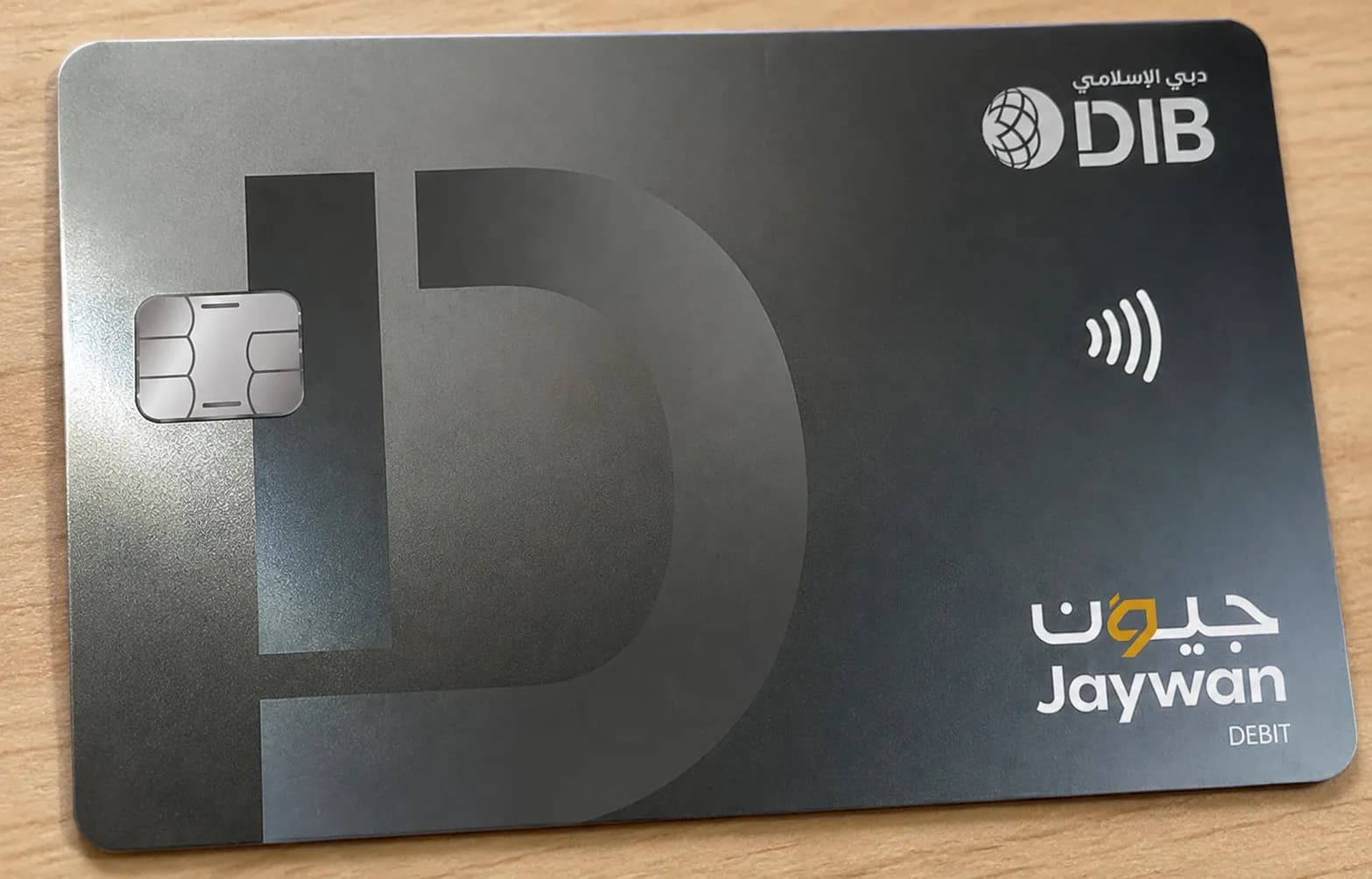
Dubai Islamic Bank has launched a debit card operating on Jaywan, the United Arab Emirates’ domestic card-payment scheme, as banks across the country begin issuing cards connected to locally operated payment infrastructure. The bank announced the launch, saying the card would be available to customers who hold existing DIB current or savings accounts.
The launch brings one of the UAE’s largest retail banking customer bases into a national rollout that moved into its operational phase in July. Jaywan is developed and operated by Al Etihad Payments, the national payments company established as a subsidiary of the Central Bank of the UAE. Domestic transactions made through the scheme can be routed through infrastructure based in the country rather than relying entirely on an international card network.
Local Processing Moves into Daily Banking
Jaywan was introduced as the UAE’s first domestic card scheme before its nationwide issuance formally began in July 2026. The Central Bank of the UAE said banks, licensed financial institutions and exchange houses would issue the cards in stages, moving the project from infrastructure development into consumer use.
Cardholders can use Jaywan for purchases at physical terminals, online transactions and ATM withdrawals where the scheme is supported. Al Etihad Payments said its debit cards provide customers with direct access to funds held in their bank accounts and are accepted across the UAE. International use may also be available when a card is issued with an approved international payment-network arrangement, depending on the product and applicable rules.
The practical change may be largely invisible at the checkout counter. A customer still taps, inserts or uses the card online, while the transaction is processed through a different underlying route. From the financial system’s perspective, however, domestic routing gives the UAE greater control over local payment processing and the handling of associated transaction data. It may also create more room for local pricing and technical standards to develop around the needs of UAE banks, merchants and consumers.
Jaywan enters a market where international networks are already deeply embedded in everyday spending. Its near-term role is therefore more likely to be complementary than a complete replacement for global card systems. Co-badged arrangements can allow a domestic scheme to process payments at home while an international network provides wider acceptance when a customer travels or shops with an overseas merchant.
Bank Rollout Will Drive Jaywan’s Expansion
DIB is joining a growing group of UAE financial institutions introducing Jaywan-linked products. First Abu Dhabi Bank and Commercial Bank of Dubai were among the institutions that announced cards as nationwide issuance began, while payment processor Network International said it had enabled Jaywan acceptance for thousands of online merchants.
Adnan Chilwan, group chief executive of DIB, said: “Jaywan represents a defining step in the UAE’s journey towards a more sovereign, resilient and future-ready payments ecosystem. As the UAE’s largest Islamic bank, DIB has a responsibility to support national initiatives that strengthen the foundations of the economy and translate strategic ambition into wider adoption. Through this launch, we are contributing to a homegrown payments infrastructure built around the UAE’s priorities, while giving our customers a secure and seamless way to participate in the country’s digital future.”
The expansion could gradually alter the competitive structure of the UAE card market by adding a domestic layer to payment processing. Institutions involved in the rollout have said potential benefits include local transaction routing, greater payment-system resilience and possible reductions in processing costs.