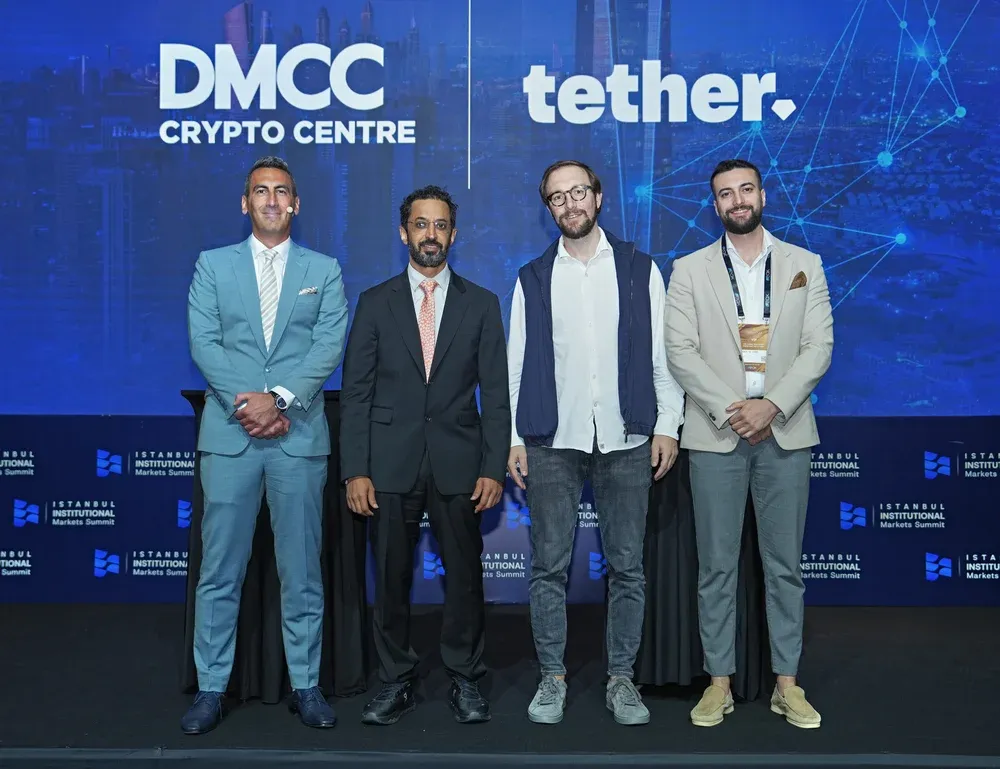
Dubai Multi Commodities Centre has signed a strategic memorandum of understanding with Tether, setting out a framework for cooperation across blockchain infrastructure, tokenization, digital asset education, and digital finance.
The agreement brings together DMCC, one of Dubai’s largest business districts and free zone ecosystems, and Tether, the company behind the USDT stablecoin. The MoU is intended to support the growth of the DMCC Crypto Centre through education programs, hackathons, advisory engagement, industry events, and broader ecosystem collaboration.
Tether Eyes Deeper Role in DMCC Ecosystem
The MoU creates a pathway for Tether to become an official ecosystem partner within DMCC’s relevant communication channels, events, websites, and publications. The two sides also plan to explore potential benefits for DMCC member companies, including workshops, blockchain advisory sessions, pilot programs, and education-focused initiatives.
Tether said that the collaboration could support DMCC businesses in areas such as tokenization, digital asset education, and blockchain applications. The company also said the initiative may include peer-to-peer communication and payment systems designed to improve member experience across the DMCC network.
The partnership also has a practical business angle. Rather than focusing only on broad blockchain strategy, the MoU could bring Tether closer to companies already working inside DMCC’s digital asset ecosystem, where demand for tokenization, payment tools, and blockchain guidance is growing.
Dubai Expands Its Blockchain Finance Ambitions
The MoU fits into Dubai’s broader effort to position itself as a hub for digital assets, Web3, and financial infrastructure. DMCC said the agreement aligns with its strategy to connect emerging technologies with global trade and strengthen Dubai’s role in next-generation commerce.
Ahmed Bin Sulayem, Executive Chairman and Chief Executive Officer of DMCC, said: “Global trade is entering a new era where financial infrastructure, payments and asset ownership are increasingly moving onto digital rails. Stablecoins are already processing trillions of dollars in transaction value, while tokenisation is beginning to reshape how real-world assets are financed and transferred across borders.”
Ahmed Bin Sulayem added: “Dubai has acted early to establish the regulatory clarity and infrastructure needed to support this shift, and DMCC is playing a central role in connecting these technologies with global commerce. Through our agreement with Tether, we will explore new avenues for collaboration across blockchain infrastructure, digital payments and tokenisation, marking a further step in scaling innovation and strengthening Dubai’s position at the centre of the global digital economy.”
Tether CEO Paolo Ardoino said the UAE is helping shape how digital asset infrastructure is adopted in real economic activity. He said the collaboration aims to support “real-world applications” of blockchain technology.
Those comments point to the wider commercial angle behind the agreement: tokenization and blockchain payments are increasingly being framed not only as crypto-sector tools, but as infrastructure for trade, settlement, asset transfer, and cross-border finance.
DMCC Crypto Centre Gains More Momentum
DMCC has been building dedicated ecosystems around commodities, finance, technology, crypto, gaming, artificial intelligence, and other emerging sectors. Its Crypto and Blockchain Ecosystem positions the DMCC Crypto Centre as a hub for companies working in crypto, Web3, blockchain development, trading, advisory, and tokenization.
The organization says it is home to more than 26,000 member companies overall, including more than 4,000 technology firms. Its Crypto Centre is separately described as hosting more than 650 crypto firms, making it one of the region’s more concentrated business communities for digital asset companies.
Under the new MoU, Tether is expected to engage with that network through knowledge-sharing and ecosystem-development initiatives. The plan includes education programs, industry events, hackathons, and potential member benefits.
Dubai’s Regulatory Framework Stays in Focus
Dubai’s digital asset sector operates within a defined regulatory environment. The Virtual Assets Regulatory Authority regulates virtual assets across Dubai’s mainland and free zones, excluding the Dubai International Financial Centre. VARA’s framework covers virtual asset activities and is designed to address market conduct, licensing, investor protection, and cross-border financial security.
Partnerships involving tokenization, payments, and stablecoins are increasingly watched through a regulatory lens. A memorandum of understanding can help companies explore commercial and educational opportunities, but regulated activities still depend on the relevant approvals and compliance requirements.
Tether’s involvement gives the agreement added visibility. As the company behind USDT, it sits at the center of many conversations about how stablecoins, tokenization, and blockchain-based payments could fit into everyday business activity.
Tokenization Gains Ground in Trade Finance
Tokenization refers to representing real-world or financial assets on a blockchain. The technology is designed to make transfers faster, improve transparency, automate settlement, and support new models for asset financing. In trade and commodities markets, it is often discussed in relation to settlement, documentation, collateral, and ownership transfer.
DMCC’s interest in the field is consistent with its wider focus on global trade flows. The organization’s business model sits at the intersection of commodities, licensing, company formation, financial services, and technology ecosystems. A partnership with Tether gives DMCC another route to expose its members to blockchain-based payment and tokenization tools.
The agreement gives DMCC and Tether a way to turn the partnership into practical support for companies. Through education initiatives, hackathons, pilot projects, and member-focused programs, the collaboration could help bring blockchain and digital finance closer to real business activity.
Dubai Deal Adds to UAE Blockchain Momentum
The DMCC-Tether agreement adds another digital asset initiative to Dubai’s growing fintech and Web3 pipeline. It also shows how stablecoin companies are seeking deeper relationships with business districts, trade hubs, and government-linked ecosystems, rather than operating only through exchanges and crypto-native platforms.
DMCC and Tether said the agreement will focus on collaboration across education, blockchain infrastructure, tokenization, digital payments, advisory engagement, and ecosystem participation.
The partnership also reflects a broader shift in how blockchain companies are trying to reach businesses. Instead of focusing only on crypto-native users, firms are increasingly looking for ways to connect digital asset tools with trade, payments, settlement, and other parts of the real economy.
The immediate significance is strategic rather than transactional. DMCC gains a high-profile digital asset partner for its Crypto Centre, while Tether strengthens its visibility in a market that has been actively building regulatory and commercial infrastructure around virtual assets.