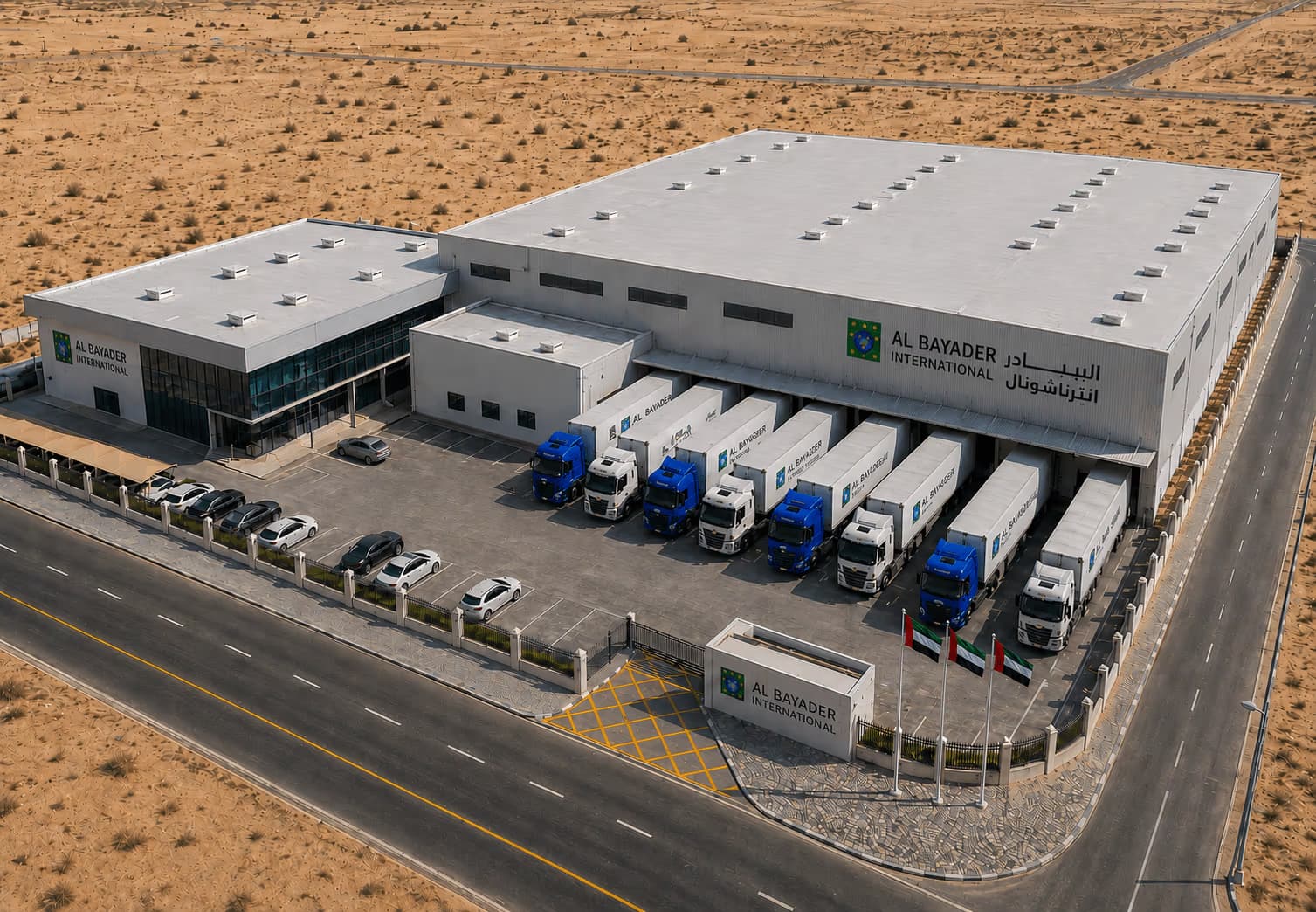
National Industries Park has signed an agreement with Al Bayader International to develop a new $49 million (AED 180 million) manufacturing and logistics hub in Dubai, adding another food-sector project to the emirate’s growing industrial corridor.
The project will cover more than 678,000 square feet and is expected to add up to 30,000 tonnes of annual food packaging production capacity once fully operational. The facility is designed to support hospitality, tourism, food service, and retail supply chains across the UAE, the Gulf region, and export markets.
Expanding Dubai’s Packaging Footprint
The planned development will bring manufacturing, warehousing, fulfillment, headquarters functions, and staff accommodation into one site at National Industries Park, a DP World UAE industrial zone in Dubai.
Construction is scheduled to begin in 2026, with full operations targeted for early 2028. Once complete, the facility is expected to produce up to 10,000 tonnes of paper-based food packaging and 20,000 tonnes of circular plastics annually, including recycled PET, commonly known as rPET. Additional lines for aluminum-based and bio-based packaging are expected to be added over time.
The scale of the investment reflects continued demand for locally manufactured packaging in a region where restaurants, hotels, catering firms, grocery retailers, aviation food services, and tourism operators depend on steady access to food-safe packaging materials.
The Supply Chain Significance
Packaging is often seen as a supporting industry, but it sits close to the center of food distribution. A shortage or delay in packaging can disrupt restaurants, supermarkets, hotels, catering companies, and exporters just as quickly as a shortage of ingredients or transport capacity.
By placing manufacturing and logistics functions in the same hub, Al Bayader is aiming to shorten lead times and improve product availability for customers. National Industries Park said the project will strengthen regional production of sustainable packaging materials while improving the ability of food businesses to source packaging closer to where it is needed.
The facility also expands Dubai’s role in the industrial side of the food economy. While the city is widely known for tourism, trade, and real estate, its logistics and industrial zones have increasingly become part of its pitch to manufacturers looking for access to Gulf, African, Asian, and European markets.
The Facility’s Key Features
The hub will include manufacturing and logistics space, a robotics-enabled fulfillment center, Al Bayader’s headquarters, and employee accommodation. The company also plans to incorporate low-emission production lines, solar energy, advanced water and waste management systems, and an on-site water treatment plant.
Landscaped green areas and a botanical garden are also planned, with irrigation using recycled water. These sustainability features are notable because food packaging companies face pressure from regulators, customers, and consumers to reduce waste, increase recycled content, and move toward lower-impact materials.
Al Bayader’s planned product mix reflects that shift. Paper-based packaging, recycled plastic, aluminum packaging, and bio-based materials are all part of a broader market transition in which food service companies want reliable supply without being locked into a single material category.
Industry Leaders Welcome the Project
Abdulla Al Hashmi, Global COO, Parks and Economic Zones, DP World, said: “Packaging plays a critical role across the food, hospitality and retail value chain, influencing product quality, sustainability and supply chain resilience. Expanding regional manufacturing capacity in this sector enhances reliability, shortens supply cycles and strengthens the broader trade ecosystem across the GCC. Al Bayader International’s new facility at NIP reinforces Dubai’s position as a hub for advanced manufacturing and value-added logistics.”
Nidal Haddad, founder and CEO of Al Bayader International, described the project as “a major milestone” in the company’s long-term growth strategy. He said the new hub would bring production, logistics, and corporate functions together on one platform, supporting efficiency, sustainability, and export growth.
The comments underline the strategic nature of the agreement. This is not only a capacity expansion for Al Bayader; it is also part of Dubai’s broader effort to anchor more value-added industrial activity inside local economic zones.
The Industrial Role of National Industries Park
National Industries Park describes itself as an integrated industrial hub serving logistics, supply chain, manufacturing, distribution, and agriculture-related businesses. Its official website says the park spans 21 square kilometers and hosts more than 400 businesses, with more than 24,700 people employed by companies operating there.
The Al Bayader project adds to a pipeline of manufacturing and logistics investments at the park. In Dubai’s wider economic diversification strategy, such projects help increase local production capacity, attract private-sector industrial investment, and connect manufacturers with the emirate’s logistics infrastructure.
The development also supports the UAE’s Operation 300bn strategy, which aims to expand the country’s industrial base, strengthen local production, and increase industrial exports. The food packaging hub fits that agenda by adding new manufacturing capacity in a sector connected to food security, hospitality, aviation, retail, and tourism.
The new site builds on Al Bayader’s existing role in the UAE and Gulf packaging market. The company manufactures and supplies food packaging products across multiple categories, serving food and beverage operators, retailers, and institutional customers.
A Supply Chain Boost for the Gulf
The project arrives as food service and hospitality activity across the Gulf continues to place heavier demands on packaging suppliers. Hotels, quick-service restaurants, cafes, catering companies, supermarkets, and delivery platforms all require packaging that is available at scale, meets safety expectations, and can adapt to changing sustainability requirements.
Local manufacturing does not remove all supply-chain risk, but it can reduce exposure to long shipping cycles and help companies respond faster to customer demand. Shorter lead times can also support inventory planning for packaging buyers, especially during peak tourism seasons, large events, and periods of stronger restaurant and catering demand.
The hub could also give buyers more flexibility as packaging needs become more specialized. Food operators are no longer looking only for basic containers and disposable items; many now need packaging that works across dine-in, takeaway, delivery, catering, and chilled display formats while meeting brand, safety, and sustainability expectations.
A larger production base in Dubai may help suppliers respond more quickly to those changing requirements. Food businesses adjusting menus, expanding delivery channels, or preparing for seasonal demand swings could benefit from nearby packaging production, making procurement less dependent on distant manufacturing schedules and international freight conditions.