Block News International

@2026 Block News International. All Rights Reserved.

Blends Media
A Blends Media Group Production

EU and Germany Launch €80 Million Fund for MENA Social Enterprises

Arry Hashemi
Arry Hashemi
Jun. 09, 2026
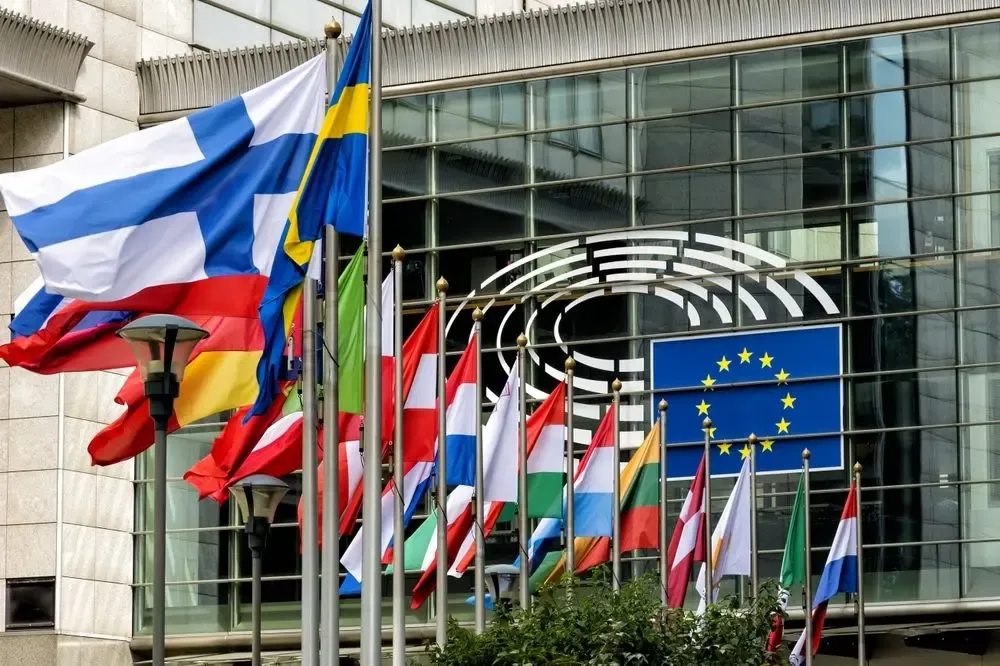
Eu 1The fund aims to help MENA social enterprises turn community-focused ideas into scalable businesses with access to new capital. (Fabrizio Maffei/Shutterstock)

The European Commission, Germany’s Federal Ministry for Economic Cooperation and Development and KfW Development Bank have launched the equity window of the Social Entrepreneurship Fund, a new €80 million initiative aimed at supporting social enterprises across the Middle East and North Africa.

The fund is designed to help mission-driven startups and small businesses access capital, create sustainable jobs and expand services in areas such as education, climate, financial access and wellbeing.

The initiative forms part of the Pact for the Mediterranean, with the European Commission, BMZ and KfW positioning it as a vehicle to support private-sector solutions to social and environmental challenges in the southern Mediterranean.

A Financing Model Built for Impact

The Social Entrepreneurship Fund has a total planned size of €80 million. Its first component is a €45 million equity fund, which has now been launched, while a €35 million debt fund is expected to follow later in the year.

The European Commission is contributing €15 million, while Germany’s BMZ is contributing €39 million. The structure also includes a Technical Assistance Facility, intended to provide specialized advice and support to participating social enterprises.

The fund’s structure reflects a blended finance approach, using public and development finance to draw in additional private investment. The goal is not only to provide capital directly, but also to improve the investment environment for businesses that combine commercial activity with measurable social or environmental impact.


Eu 2The €80 million initiative is designed to back social enterprises working across learning, wellbeing and climate in the Middle East and North Africa. (Shutterstock)

Supporting MENA’s Social Enterprises

Social enterprises often operate in sectors where demand is high but financing can be difficult to secure. Many are built around education, employment, healthcare, climate adaptation, financial inclusion or community services, areas that may generate long-term value but do not always fit conventional lending or venture capital models.

The new fund aims to address that gap by backing Seed and Series A companies with proven early traction, scalable business models and a commitment to positive change in the region.

The fund aims to reach more than 136,000 people and unlock more than €67 million in additional capital.

Targeting Education, Health and Climate

The fund will invest in businesses working across three main pillars: learning, wellbeing and climate.

In learning, the focus includes companies expanding access to education, skills development, employability and economic mobility. In wellbeing, the fund will target solutions connected to financial, mental and physical wellbeing. The climate pillar will focus on companies helping communities adapt to, mitigate or respond to environmental pressures.

The investment areas reflect some of the region’s most persistent development challenges, including youth unemployment, gender inequality and the need for stronger green and digital transitions.

Eu 3The fund is expected to support sustainable jobs and social impact across the southern Mediterranean. (Unsplash)

Anara Takes Charge of Equity Fund

Anara Impact Capital will manage the equity fund. The firm describes itself as a MENA-focused impact investment platform backing early-stage technology companies working in learning, wellbeing and the environment.

Anara says its impact investment strategy aims to generate commercial returns for investors while maximizing positive and measurable social and environmental impact. The firm says it invests across MENA in impact-driven businesses, using financial instruments that may include equity, debt and hybrid structures.

Anara was spun out of Alfanar Venture Philanthropy, bringing more than two decades of experience supporting impact enterprises across the Arab world.

Officials Highlight Job Creation Goals

European Commissioner for the Mediterranean Dubravka Šuica said the European Union is committed to “inclusive growth and job creation” across the Middle East and North Africa.

Officials also positioned the fund as part of a broader effort to strengthen entrepreneurial ecosystems and support companies that can respond to challenges in education, climate and financial inclusion.

Christiane Laibach, member of the executive board of KfW Group, said: “The Middle East and North Africa are vibrant regions with strong potential, yet job creation remains a key challenge. SMEs are the backbone of employment, but those with a strong social mission face even greater barriers to accessing finance. Supporting these social enterprises means not only creating jobs, but also delivering lasting social impact for communities. This is the vision of the Social Entrepreneurship Funds. KfW is proud to act as a cornerstone investor on behalf of the European Commission and the German Government to foster inclusive and sustainable growth.”

The fund has attracted support from institutional and regional investors, including BMZ, Dara Holdings, ISSF and other private investors from the region. Their participation adds a private-sector layer to the initiative, reinforcing the fund’s goal of mobilizing capital for social enterprises across MENA.

The launch comes as development institutions and regional investors continue to look for ways to expand capital access for startups addressing social and environmental needs.

The MENA region has a young population, large employment needs and growing demand for services tied to education, climate resilience and financial inclusion. Businesses working in these areas can play an important role in job creation, but many still face financing constraints, especially when their business models serve lower-income or underserved communities.

By combining equity, debt and technical assistance, the Social Entrepreneurship Fund is intended to give social enterprises a more flexible path to growth.