

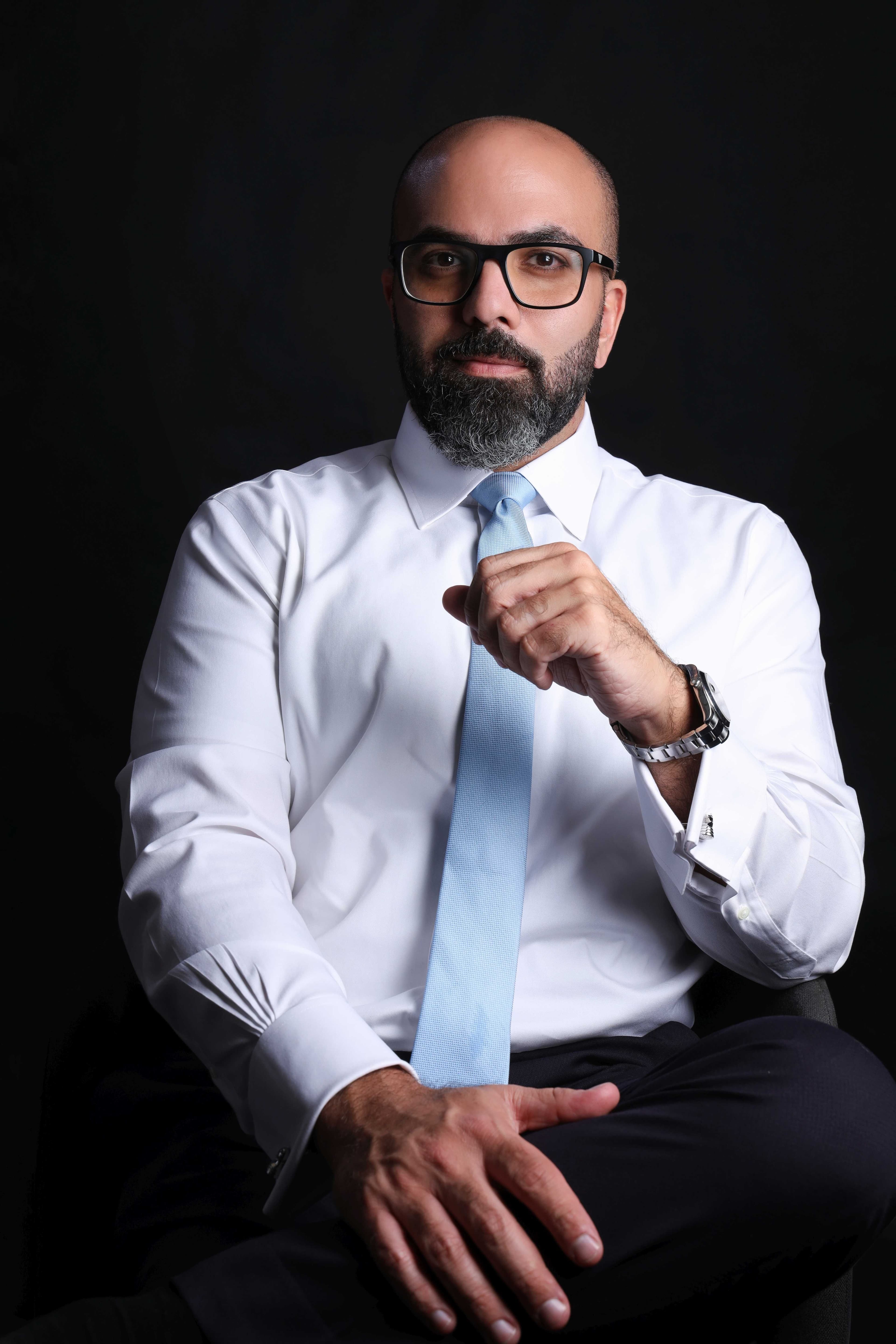
 According to Amir Tabch, CEO of OFZA, virtual asset inheritance remains one of the most overlooked risks in crypto adoption. (Image: Provided)
Most problems with inheritance are easy to see. People put off these conversations for years, hoping they never have to finish them. And when they happen, they happen in courtrooms, lawyers' offices, or during awkward family conversations.
This is not how virtual assets work. When something goes wrong in crypto, it usually happens quietly and doesn't leave much behind to fight about.
The Middle East is witnessing steady growth in virtual asset adoption. You have a lot of young people who are comfortable with technology, a lot of people who work across borders, and growing awareness of digital asset based financial solutions.
But there's a problem we don't talk about very often. When a person with virtual assets dies, they often lose access to them as well. Not because of fraud or theft, but because no one knows where it was stored or how to get to it.
Analysts think that between 10% and 20% of Bitcoin around the world may already be permanently lost because people lost their keys, but no one knows for sure how many. You might think this is too abstract until you see it happen. Families may know there was something there, but knowing isn't the same as proving it or accessing it. Executors can't start their work because there isn't anything clear to show. Wealth disappears without a trace, leaving no closure.
There are problems with inheritance in traditional finance, but at least the process is well-known. There are steps, paperwork, and beneficiaries, even if they take time and aren't perfect. Things are much less forgiving when it comes to digital assets. If you lose your own keys, the asset is gone for good.
People don't realize how important this problem is in the Middle East.
A lot of the region's digital wealth is new. People are still working on it, so they often think succession will be an issue in the future. But life doesn't wait for plans, and families usually don't get to choose when these problems come up.
This is also harder because of cultural differences. People often don't talk about money, especially digital money, because it's so private. The more valuable an asset is, the fewer people who know about it. Not even a spouse in some cases. At first, that quiet feels safe, but then it doesn't.
Cryptography is not the problem. Blockchains do exactly what they're supposed to do: make ownership clear, strict, and tied to a person's identity. The hardest part is what happens after the owner dies, because ownership doesn't end in a simple way.
Virtual assets are good at showing who owns them, but they aren't made to deal with what happens next.
This is not just a theory anymore; it's a real problem as people add virtual assets to their long-term portfolios. It's not just hard to use an asset if you can't get to it or pass it on; it's gone. That isn't progress for families; it's a weakness.
Some people say this is just about being responsible. They say you should write things down, leave instructions, or take better care of your keys.
That advice doesn't usually match what people do in real life. People are secretive when they feel safe. Most people don't want to leave behind papers that could get them in trouble, so they stay quiet. That silence lasts forever after a while.
We have worked on building on-chain nomination and succession systems at the architectural level as part of our jobs. We created a nomination program as a technological solution, not a legal one. This lets users choose beneficiaries who can inherit a certain percentage of their assets if the user dies, and the nominee or nominees must accept the invitation, they get the option to claim the allocated assets, which makes it less likely that the assets will become inaccessible. These aren't meant to take the place of estate planning or inheritance law, which are still legal issues. Our technology, on the other hand, lets people record and carry out their wishes and mitigates the chance that assets will get lost because no one planned for access.
We didn't start working on it because it was trendy. We did it because we kept seeing the same problems with access in real life. Situations in which legal rights were present, yet practical access was absent.
This isn't just a problem for the future. It's already happening quietly in homes all over the area.
People in the Middle East need to plan for what happens to virtual assets after the owner dies if they are going to treat them as real wealth. Having something without a plan for the future doesn't give you real power.
This risk stays hidden for a long time. When it finally comes out, there's usually nothing left to get back.
Magma CEO Matthieu Merchadou interview

MiCA’s impact on crypto in Europe: winners & losers

Learn which generation is likely to invest in crypto.

OpenAI, blockchain, and the AI-crypto convergence

Stay ahead with the latest updates, insights, and trends shaping the world of finance, investment, blockchain, digital business, fintech, technology, and global markets.
